
What is the difference between flake alkali and solid alkali (grain alkali)?
Oct 09,2023
The difference between "flake alkali" and "grain alkali" lies in the different raw materials.
The difference between "flake alkali" and "grain alkali" lies in the different raw materials. The flake alkali is made by the reaction of liquid ammonia and soda ash, while the solid alkali is made by the reaction of caustic soda and sodium silicate.
"Solid alkali", also known as "granular alkali", is a solid that is synthesized with water at low temperature and stored for several years without decomposition. Solid alkali usually takes sodium silicate (Na2SiO3) as the main component, and a certain amount of soda ash (Na2CO3) is added. Under the condition of less than 40 ℃, sodium silicate can be generated after a series of chemical reactions. After the solid alkali is made into a granular product, it can be packaged. Granular solid alkali is the finished product. In addition, solid soda plants in some countries also produce granular products.
Tablet alkali granular products are more commonly used in glass, enamel, ceramics and other industries. Because flake alkali is strongly alkaline, solid flake alkali particles are generally used in chemical industry, food industry and so on. Therefore, solid flake alkali particles are generally used directly in chemical industry and food industry.
Solid flake alkali particles are obtained by crushing and packaging the flake alkali particles obtained by the reaction of liquid ammonia and soda ash. Because of its granular appearance, it is called "granular alkali". In addition to being used as glass, enamel and other industries, granular alkali particles are also commonly used in the printing and dyeing industry to bleach cotton fabrics.
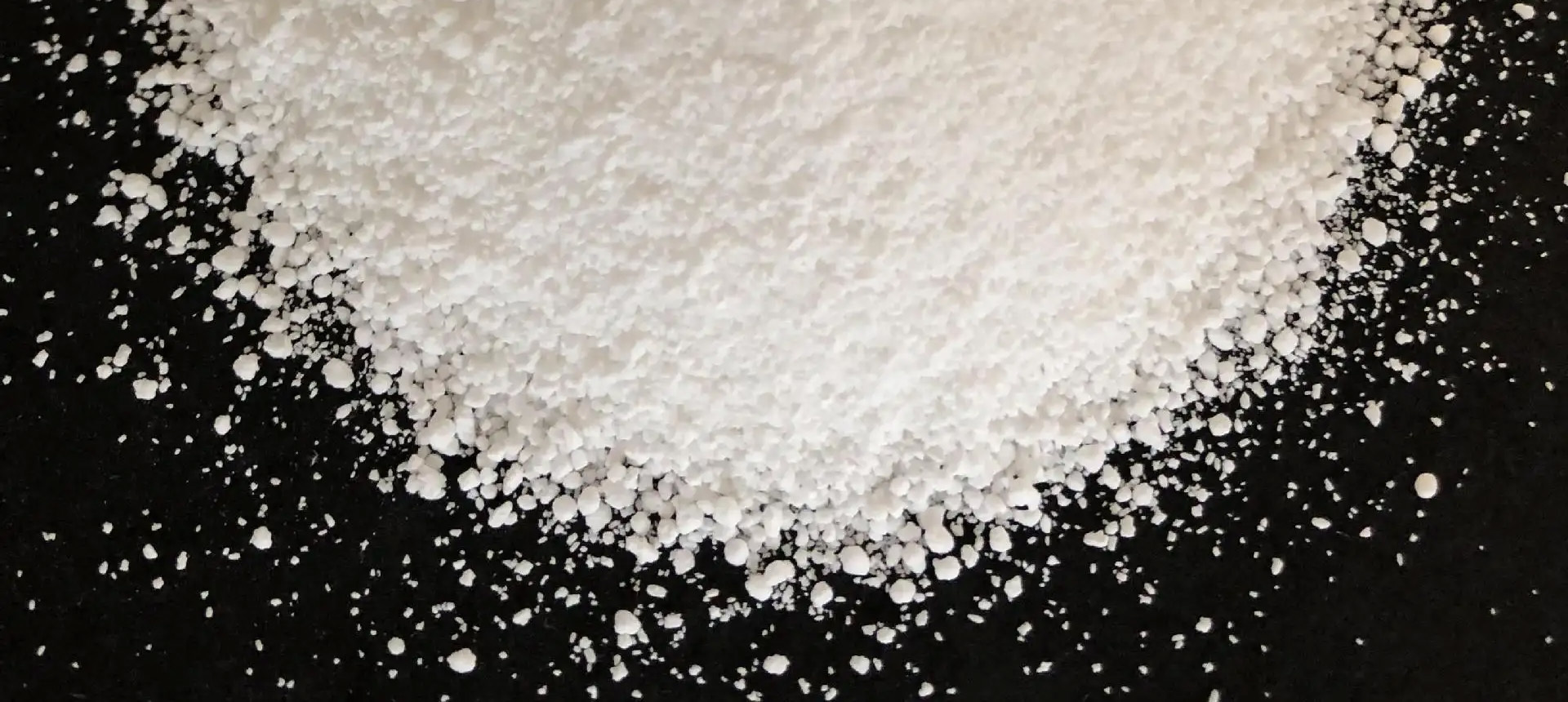
Solid alkali is a good foaming agent and thickener, which is widely used in textile, papermaking and washing industry. Solid alkali itself is a white powder or granular solid, easy to absorb water expansion into larger solid particles; solid alkali absorption of water volume can be expanded to more than 4 times the original volume.
Different forms and uses of solid alkali products have different forms, production methods and application ranges, so the appropriate form and application range of solid alkali products should be selected according to the product form and use. For example, for granular alkali particles that do not contain impurities such as calcium and magnesium, attention should be paid to drying before being put into water or air.
Other Blog


Telephone: 86 13354733984
E-mail:1562349688@qq.com
Address:
No. 106, Floor 1-2, Building 2, Ruide Garden Commercial Building, Wuda District, Wuhai City, Inner Mongolia Autonomous Region, China
Yuze Chemical TikTok

Jianyu maple tremolo

Direct contact